2025 was the year that brought my love for reading back.
With the growing influence of influencers in the book world since Covid, I sadly fell into what I would call “capitalist reading.” Don’t get me wrong. Book Social Media has also done a lot of good for me. I discovered genres I didn’t even know existed, found friends, and gained endless inspiration.
But it also brought pressure: the urge to read more and more without really reading the books; the feeling that every book, no matter how bad, had to be finished; picking books because they were trending; and, of course, the endless desire to buy more books.
I managed to get rid of almost all of these habits, well… except for buying books like there’s no tomorrow (which I personally don’t see as a problem, and my partner hasn’t complained yet either, hehe).
Now I’ve finally fallen back into books the way I used to before Covid (there is only before and after Covid, let’s be honest). My reading count dropped by about 20%, but I no longer force myself to finish books I don’t enjoy. I take my time sinking into worlds. I put books down just to excitedly ramble to my partner about what currently fascinates me, even though he understands absolutely nothing because my retellings are pure chaos.
And in the end, the stories actually stay with me. They don’t blur together. They leave something behind.
This year, three books even made it onto my all-time favourites list and honestly, there’s no greater achievement as a reader than that.
So here are my reading highlights of 2025.
9. Once Was Willem by M.R. Carey
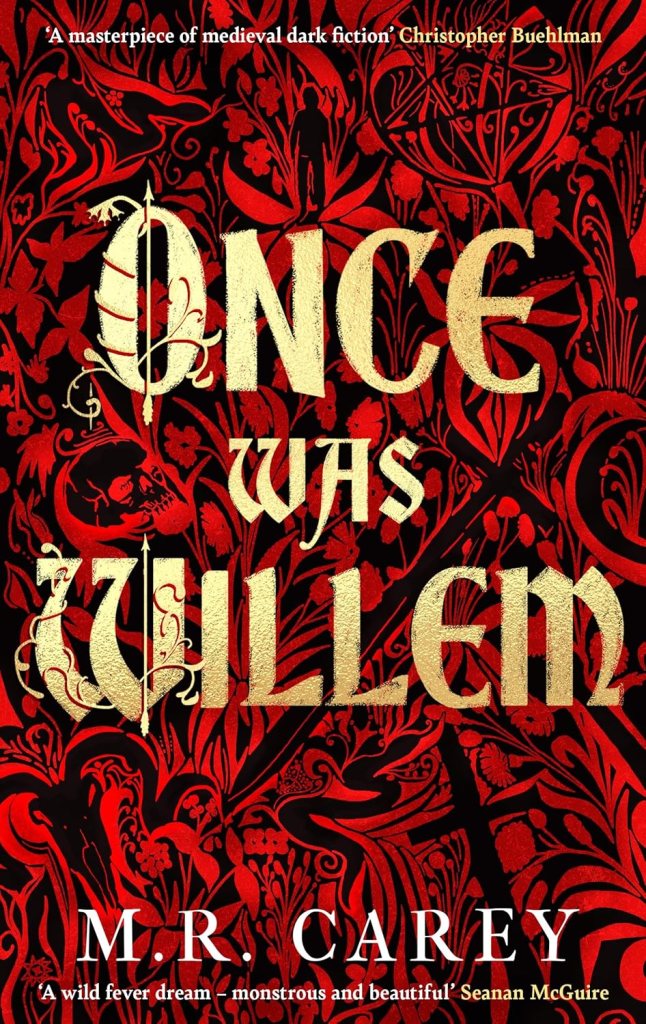
Eleven hundred and some years after the death of Christ, in the kingdom that had but recently begun to call itself England, I, Once Was Willem, rose from the dead to defeat a great evil facing the humble village of Cosham. The words enclosed herein are true.
Dark, cozy folklore fantasy and such a refreshing experience.
If you’ve ever read a German fairy tale and felt deeply unsettled by it, but somehow still loved it anyway, then first of all: something might be a little wrong with you and second of all, I think we would get along very well.
This book creates a medieval setting that feels old, worn, and deeply rooted in folklore, mixed with fairy tale logic and a quiet, creeping horror involving zombies. What really made this story special for me was the lyrical writing style. It allowed such a unique emotional connection to Willem or Once-Was-Willem that I found myself caring for him in a way that felt almost instinctive.
The side characters, all seemingly torn straight out of old fairy tales and legends, added so much warmth and personality to the story. Each of them felt strange, purposeful, and oddly comforting, even when the world itself was cruel and unforgiving. The atmosphere balances darkness and tenderness perfectly grim without being cold, emotional without being sentimental.
This is the kind of book that lingers quietly in your mind, like a half-remembered story someone once told you by candlelight. I finished it feeling both unsettled and strangely comforted and I will definitely be reading more from this author.
8. A Song to Drown Rivers by Ann Liang
Since birth, Xishi’s extraordinary beauty has been seen as a blessing. When Xishi draws the attention of the famous young military advisor Fanli, he presents her with a rare opportunity: to use her beauty as a weapon. One that could topple the rival neighbouring kingdom, improve the lives of her people and avenge her sister’s murder. All she has to do is infiltrate the enemy palace as a spy and seduce their immoral king.
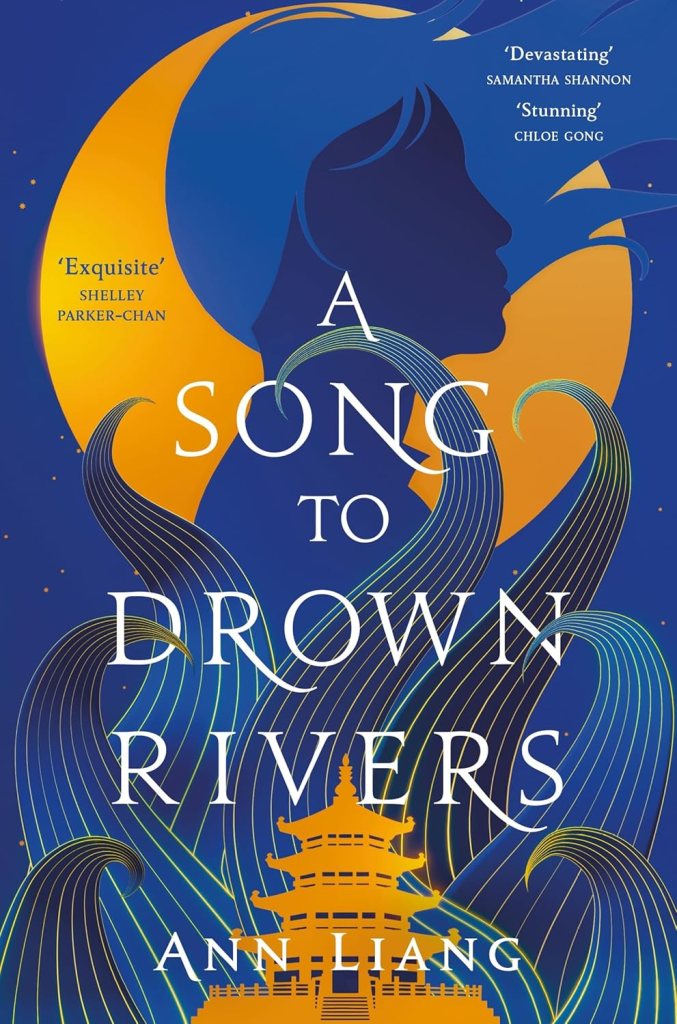
I usually don’t enjoy C-dramas at all. They often feel overly dramatic and emotionally loud, which is why I went into this book with fairly low expectations. That made the experience even more surprising.
Set in ancient China, this story blends political intrigue, war, espionage, and romance in a way that felt far more grounded and emotionally satisfying than expected. This is also the first book where I genuinely enjoyed a “love triangle”, even though it isn’t really a triangle in the traditional sense.
There is a clear “good” and “bad” option on paper, and yet I found myself rooting for the bad one by the end. Not because his actions are excusable, but because the book takes the time to explore vulnerability, loneliness, and emotional neglect. Yes, this may sound cliché I will fix him but the emotional journey felt earned.
Watching the characters grow, make mistakes, and change was incredibly rewarding. This book surprised me in the best way, and I would happily read more from Ann Liang in the future.
7. The Devils by Joe Abercrombie
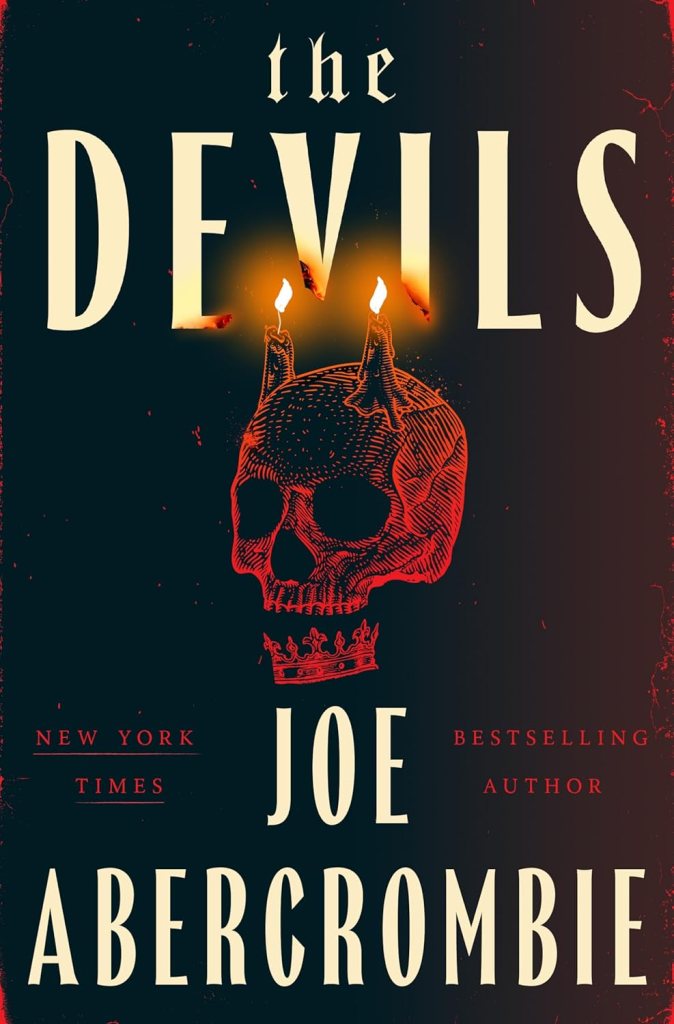
Brother Diaz has been summoned to the Holy City, where he is certain a commendation and grand holy assignment awaits him. But his new flock is made up of unrepentant murderers, practitioners of ghastly magic, and outright monsters. The mission he is tasked with will require bloody measures from them all in order to achieve its righteous ends.
After The Name of the Wind, Joe Abercrombie’s The First Law was the second epic fantasy series I ever read, so he has held a special place in my heart ever since. Naturally, I was beyond excited to pick up The Devils.
Instead of reinventing himself, Abercrombie stays true to what he does best: morally questionable characters, sharp humour, and a chaotic quest. The cast alone is wonderfully unhinged: An aggressive werewolf, an incredibly charming vampire, the third-best (or maybe second-best) wizard, an immortal knight, a pirate who is also a blacksmith and seemingly a thousand other things as well (at this point you start wondering what she hasn’t done), an elf, and an heir.
For a while, I wondered if the stakes might be too low. And then the final ten percent hit and everything suddenly clicked into place. That ending reminded me exactly why I fell in love with Abercrombie’s writing in the first place.
This book feels like Abercrombie having fun while still knowing exactly when to pull the rug out from under the reader. If you enjoy the Diablo games, this reads like a dark fantasy comedy version of that world.
6. Valour by John Gwynne
The Banished Lands has a violent past where armies of men and giants clashed in battle, the earth running dark with their heartsblood. Although the giant-clans were broken in ages past, their ruined fortresses still scar the land.
But now giants stir anew, the very stones weep blood and there are sightings of giant wyrms. Those who can still read the signs see a threat far greater than the ancient wars.
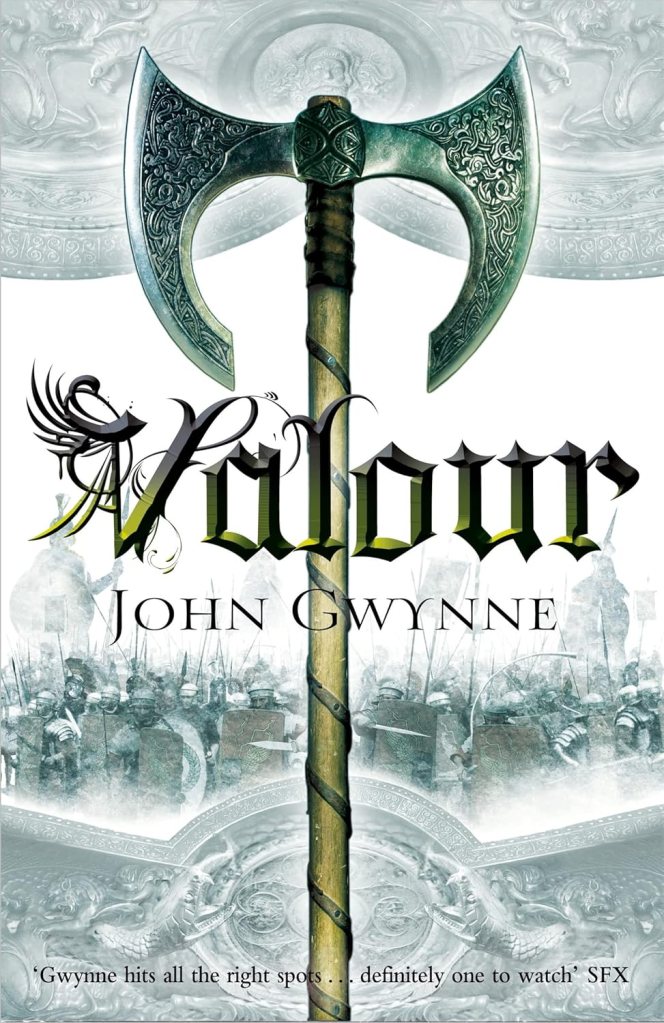
Two emojis describe my entire experience with Valour: 😮😭
People often dismiss middle books as filler but Valour proves how wrong that assumption can be. While I already enjoyed Malice, this book made me emotionally attach myself to the characters in a way I rarely experience.
I didn’t just follow the story, I lived it with them. Corban and his relationship with his sister Cywen felt deeply real. Veradis’ moral struggle added so much emotional weight. And then there is Maquin…
After the ending of Malice, I never expected his story to go where it did and yet he became one of my all-time favourite fantasy characters. I fell hopelessly in love with him.
For me, Valour is genuinely a perfect fantasy novel. I cannot think of a single flaw. Sadly, books three and four didn’t quite reach the same heights but that doesn’t change what this book achieved. Valour remains unmatched.
5. Young Jane Young by Gabrielle Zevin

This is the story of five women…and the scandal that binds them together.
After Tomorrow, and Tomorrow, and Tomorrow became one of my all-time favourite books, I knew I needed to read more from Gabrielle Zevin, preferably something that would emotionally challenge and unsettle me. And once again, she delivered exactly that.
Young Jane Young is provocative, feminist, and deeply uncomfortable in all the right ways. It explores the double standards placed on women, especially in contrast to how men are treated for the same actions. What I appreciate most is that the women in this story are not portrayed as flawless or morally pure. They make mistakes. They act selfishly. They are human.
And yet, the reaction is always the same: “Well, it’s her own fault.”
The book exposes how women are expected to be perfect in order to be taken seriously, especially in male-dominated spaces. What makes this even more painful is how current the themes still feel, echoing real-world events like the Lewinsky scandal.
This book doesn’t offer easy answers or comfort. Instead, it invites reflection, frustration, and anger and that is exactly why it works so well.
4. Navola by Paolo Bacigalupi
Navola is a city built on trade.
Its palazzos and towers are conjured from its merchant wealth: barley and rice, flax and wool, iron and silver, arms, armies, lives and kingdoms are all traded here.
And presiding over it all, the Regulai bank. By guile, force of arms and the cast-iron might of their money and promises, in just three generations the Regulai family have risen far from their humble origins: merchants beg their backing, artists their patronage, princes an invitation to dine at their table. The Regulai say they are not political, but their wealth buys cities and topples kingdoms.
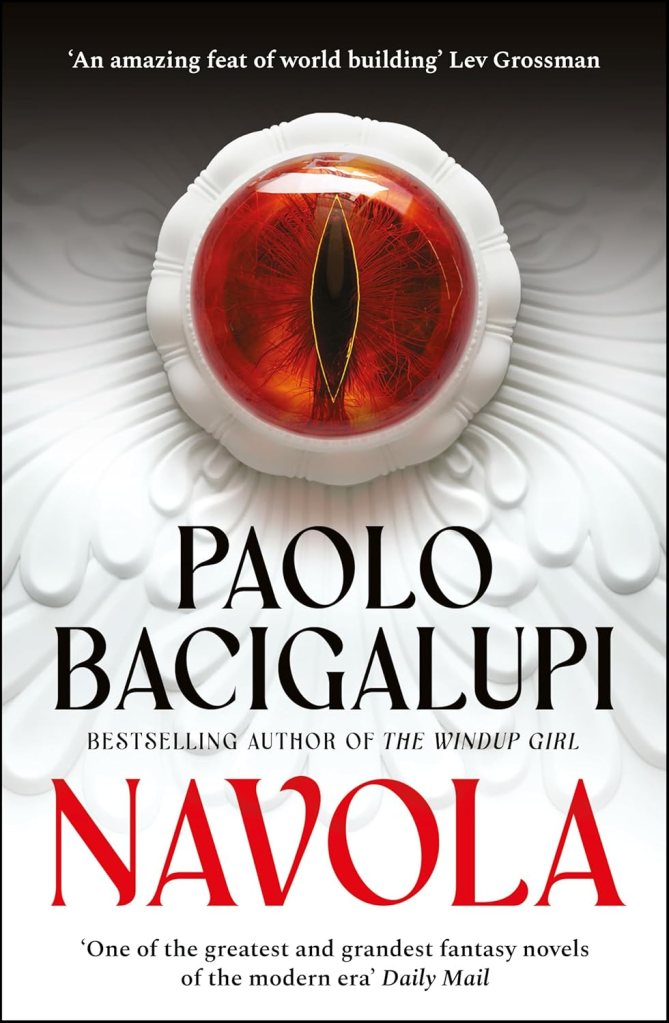
This book is criminally underhyped. Truly wow, wow, wow.
If you love political intrigue, Navola will absolutely consume you. The scheming and power plays feel so grounded and realistic that they rival Game of Thrones. And the fact that this is a standalone (for now) makes that ending even more devastating.
The Renaissance Italy–inspired setting is exquisitely crafted and deeply embedded into the characters themselves. You don’t just see the setting, you feel it in how people think, manipulate, and survive.
Davico is a naive, kind protagonist forced to question whether goodness has a place in a world ruled by ambition and cruelty. His coming-of-age journey is subtle, painful, and deeply human.
There isn’t much traditional plot here. Navola thrives on atmosphere and emotional tension. But if you enjoy clever storytelling, slow political burns, and a quiet, lingering heartbreak, this book is a must-read. Robin Hobb fans will feel especially at home.
3. Tender Is the Flesh by Agustina Bazterrica
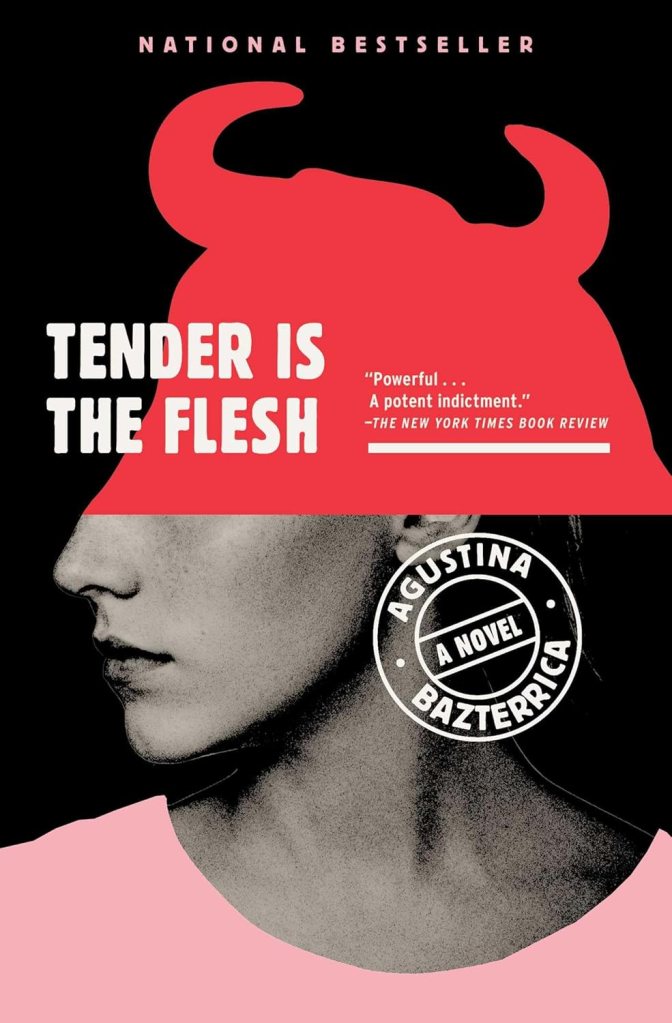
His wife has left him, his father is sinking into dementia, and Marcos tries not to think too hard about how he makes a living. After all, it happened so quickly. First, it was reported that an infectious virus has made all animal meat poisonous to humans. Then governments initiated the “Transition.” Now, eating human meat—“special meat”—is legal. Marcos tries to stick to numbers, consignments, processing.
Then one day he’s given a gift: a live specimen of the finest quality. Though he’s aware that any form of personal contact is forbidden on pain of death, little by little he starts to treat her like a human being. And soon, he becomes tortured by what has been lost—and what might still be saved.
What could be more disturbing than human beings?
The answer, unfortunately, is nothing.
This book left me deeply unsettled, not just because of its premise, but because of how convincingly it dismantles the idea of inherent human morality. It forces you to confront the uncomfortable truth that morals are often flexible shaped by society, necessity, and normalization rather than any true ethical backbone.
I don’t want to spoil anything, because this is a book that should be experienced with as little prior knowledge as possible. But it made me question how easily people adapt to cruelty when it benefits them or becomes routine.
All I will say is this: the ending confirmed exactly what I hoped it wouldn’t and that final realization still haunts me.
2. The Lamb by Lucy Rose
Margot and Mama have lived by the forest since Margot can remember. When Margot isn’t at school, they spend quiet days together in their cottage, waiting for strangers to knock on their door. Strays, Mama calls them. Mama loves the strays. She feeds them wine, keeps them warm. Then she satisfies her burning appetite by picking apart their bodies.
But Mama’s want is stronger than her hunger sometimes, and when a white-toothed stray named Eden turns up in the heart of a snowstorm, little Margot must confront the shifting dynamics of her family, untangle her own desires and make a bid for freedom.

The Lamb shares its place with Tender Is the Flesh, not because one is better than the other, but because they explore a similar theme in completely different ways. Where Tender Is the Flesh looks outward at society and collective morality, The Lamb turns inward, focusing on relationships, especially the deeply complex and unsettling bond between mother and daughter.
Cannibalism is not the shock factor here. It’s merely the language the book uses to talk about love, control, dependency, and emotional consumption. And that is what made this book so unsettling to me: how quiet, intimate, and painfully honest it is.
What struck me most is how fearlessly The Lamb portrays love not as something inherently pure, but as something that can be selfish, possessive, and deeply damaging. The mother’s love is not nurturing, it is consuming. It exists less for the child and more to fill the mother’s own emptiness. And that makes it far more terrifying than any explicit horror could ever be.
Margot, who only wants to be loved and to give love in return, broke my heart. She is such a strong character precisely because she remains gentle in a world that gives her so little warmth in return. Despite growing up surrounded by emotional absence, she refuses to lose her kindness and that quiet resilience stayed with me long after I finished the book.
This is a deeply personal story, and I truly believe every reader will experience it differently. But it will hit especially hard for those who never felt truly safe, seen, or loved within their own families.
Some books can’t really be explained, they can only be felt.
The Lamb is one of them.
And my favourite book of the year … *drum-roll*
.
.
.
1. The Mad Ship by Robin Hobb
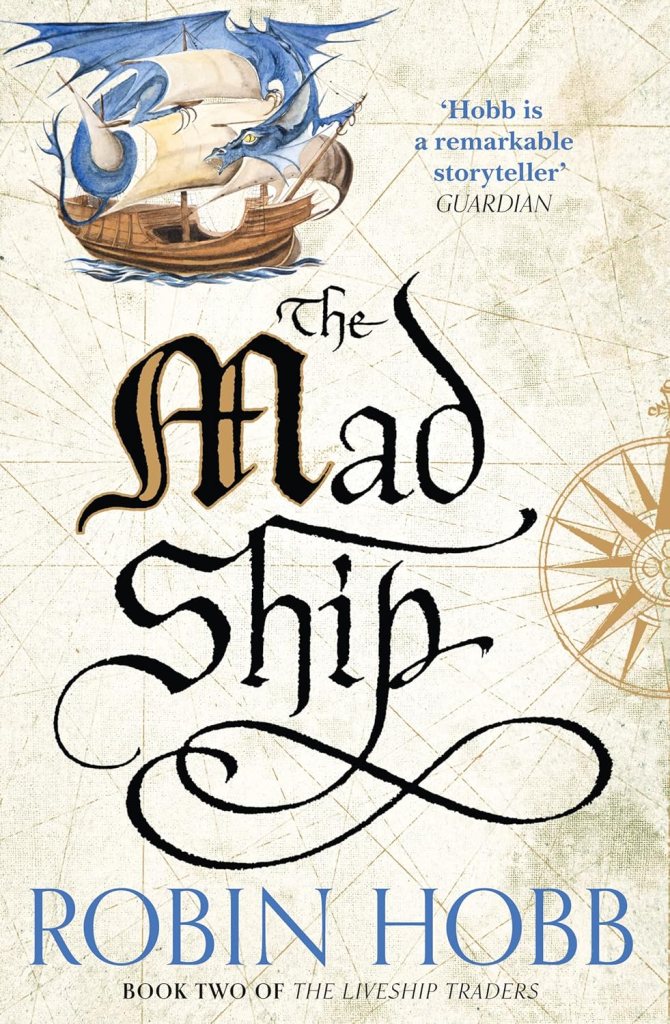
Wizardwood, the most precious commodity in the world, comes only from the Rain Wilds. But only a liveship can negotiate the perilous waters of the Rain Wild River, and liveships are hard to come by. They quicken only when three family members from successive generations have died upon their deck.
The liveship Vivacia is about to undergo her quickening: Althea Vestrit waits for the ship that she loves more than anything in the world to awaken. But her dream of taking her father’s place at Vivacia’s helm is not to be, for her family have other plans. . .
And the dark, charming pirate Kennit also lusts after such a ship: he well knows the power of wizardwood and has plans of his own . . .
This was the book I talked about the most this year to the point where my partner probably knows character names he’s never met and never will. It also represents the entire series for me in the best possible way: slow, emotional, frustrating, and incredibly rewarding.
I cursed at this book. I paused reading to stare at walls. I developed wild theories and explained them passionately to my partner, who understood absolutely nothing and yet listened patiently every single time. That alone should tell you how deeply this story pulled me in.
Plot-wise, not much happens. And yet, emotionally, everything happens. Robin Hobb writes interpersonal relationships like no one else. Every conversation, every silence, every misunderstanding carries weight. The characters feel painfully real, especially Paragon. And honestly, why does no one ever truly listen to Paragon? That alone broke my heart more than once.
More than any other book this year, The Mad Ship reminded me why I fell in love with epic fantasy in the first place. Slow storytelling. Deep immersion. Living alongside characters rather than rushing through events. Traveling with friends and enemies and forming attachments so strong that leaving them behind feels like a small kind of grief.
Saying goodbye to this world was difficult. But I’m also incredibly grateful that the journey isn’t over yet. I can’t wait to continue through The Realm of the Elderlings, even if I already know it will hurt.
 The Reading Stray
Definitely agree there’s only before and after covid. 😂 I still need to read ONCE WAS WILLEM…the medieval cover reeled me in, but I’m behind on that ARC. 🫣
LikeLiked by 1 person
I like the before COVID time more but what can I say 😂😂😂 This book was so unique and beautiful! I’m now on a hunt for more medieval fantasy books but I can’t find that many 😦
LikeLiked by 1 person
I really like how you’ve described reading of The Mad Ship and how it reminded you why you love epic fantasy.
Robin Hobb is the reasons I fell in love with reading and writing epic fantasy. I haven’t read the Liveship traders series yet, but I have loved and sobbed over her other books.
Thanks for reminding me to pick up this series.
LikeLiked by 1 person
Thank you so much ! 🙂
Especially the last Book in the Liveship Traders series is so epic. Before it was more about the personal conflicts, but the last one is just one epic fantasy book! I think you’ll love this series even more than the Fitz books ! 🙂
LikeLiked by 1 person
This is such a beautiful and honest reflection on reading. I love how you describe moving away from “capitalist reading” and back to really feeling stories again. The way the books stay with you now instead of blurring together says so much and three all-time favourites in one year is amazing. This genuinely made me want to slow down and read more intentionally.
LikeLiked by 1 person
Thank you so much ! 🙂 I’m so glad that I’m now enjoying reading books again 🙂 I hope for you that it will be the same in 2026 ! 🙂
LikeLike
Most of these titles are on my TBR Backlist! I have a lot of catching up to do with my reading!
LikeLiked by 1 person
I hope you’ll enjoy all of them 🙂 There are so many good books and it’s hard to keep track of it:D
LikeLiked by 1 person